House flipping in 2026: 5 things you must check before buying a renovation apartment
House flipping in Poland is still alive — but it’s no longer the “easy business” it was a few years ago. In 2026 the market is more mature, more competitive, and margins are tighter. A flipper has to work with precision, test every assumption, and make decisions based on data, not gut feeling.
Let’s start with the basics.
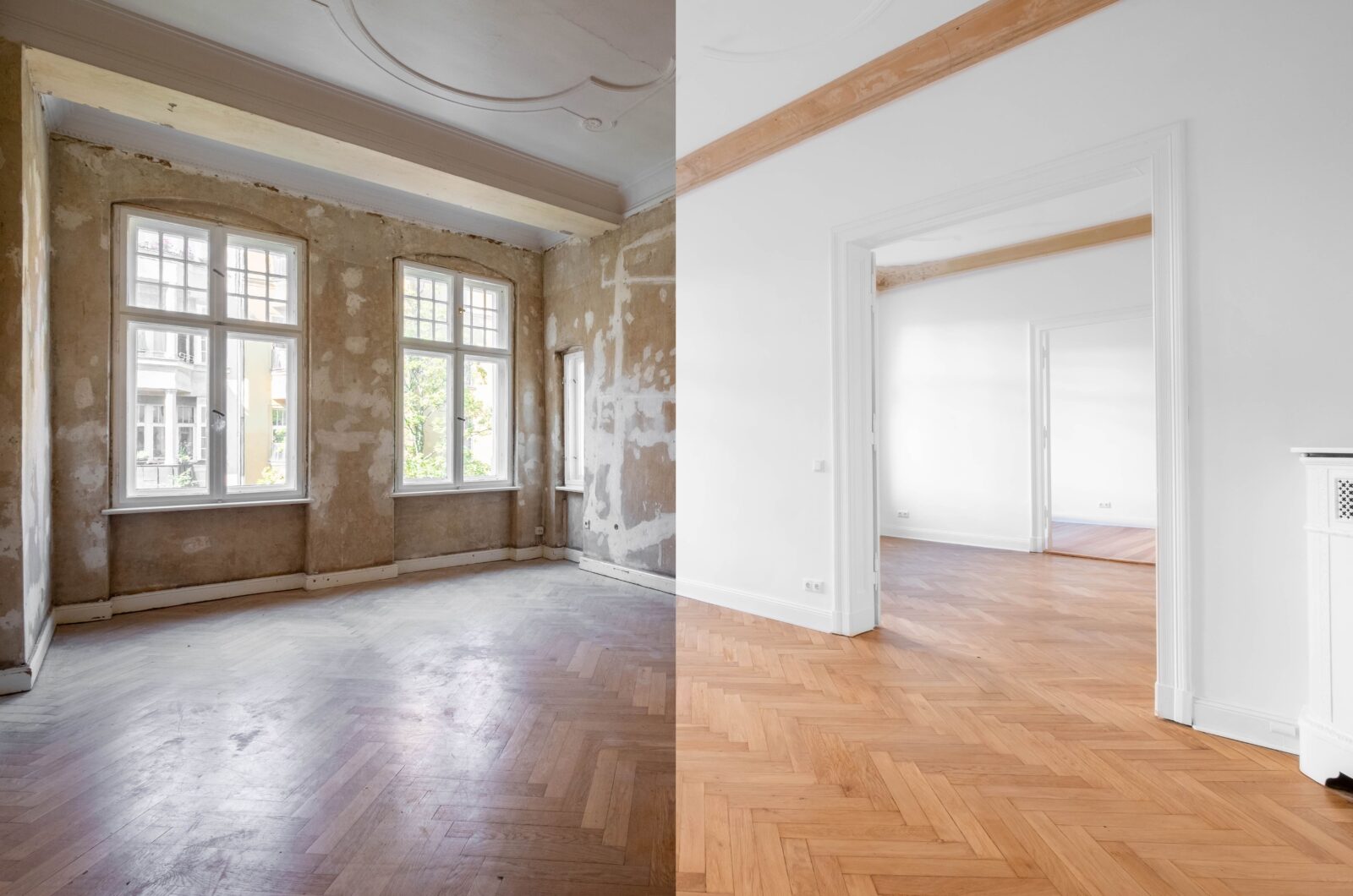
House flipping means buying an apartment (usually on the secondary market), doing a fast but smart renovation, and selling it for profit. Sounds simple on paper — but in reality it’s one of the most complex real estate strategies, because most key decisions happen before you buy.
And the biggest decision is: is this apartment worth buying at all?
This article covers exactly that — the 5 checks you should always do before making an offer. Without them, flipping in 2026 is closer to gambling than business.
1. Location and micro-location: this is where flips are won or lost
A “good district” doesn’t automatically mean a good deal. In flipping, streets matter more than reputation.
Check:
- Access to public transport – buyers still pay for easy commuting (hybrid work didn’t change that).
- Local development plans – if a major road appears 200 meters from the building in 2 years, value can drop.
- Noise and traffic intensity – the street may be fine, but a busy junction nearby can hurt demand.
- Services and green areas – families and singles care more and more about daily comfort.
- Immediate surroundings – a school right across the street? Parking under the windows? These details affect the real price.
Only if these elements make sense should you move forward. Otherwise: walk away before you freeze your capital.
Many people buy a “cheap” apartment and only later discover:
- a noisy road is planned nearby,
- parking is a nightmare,
- public transport requires two transfers,
- the building sits next to a loud 24/7 store.
Even the best renovation won’t fix that.
2. Building condition and installations: this is where hidden costs appear
In 2026 renovation crews and materials are expensive, so a mistake at the buying stage hurts more than before. If you misjudge the building, the “renovation” can cost more than you expected — fast.
Make sure you check:
- electrical wiring (aluminium vs copper),
- water and sewage risers (replaced or not),
- heating (gas boilers often mean extra issues and risk),
- ventilation (old tenements can mean humidity problems),
- facade and roof condition,
- planned renovations by the cooperative/community (elevator, facade, stairwell — these costs hit owners).
Example conversation with a contractor
- You: “I see aluminium wiring. Can we replace everything, and how long does it take?”
- Contractor: “At least 5–7 days. Cost depends on size, but think PLN 8–12k.”
- You: “What if I keep it?”
- Contractor: “Buyers will notice. It can reduce the sale price and cause problems after the sale.”
Many flippers postpone this issue for “later.” In practice, “later” costs double.
3. Estimate the after-renovation value realistically (the key flipping metric)
Flipping is not about making an apartment look nice — it’s about selling it for more than all costs combined.
The most common mistake:
“I’ll buy for 350k, spend 60k, sell for 460k.”
That’s wishful math.
Real value depends on:
- market data,
- transaction prices nearby,
- building standard,
- layout quality,
- demand in that exact micro-location,
- trends in your city.
How Estify helps
Estify can generate a data-based valuation that includes:
- the current condition,
- location and amenities,
- market data,
- a mix of transaction, listing, and reference benchmarks.
The goal is clear: estimate your likely selling price after renovation — because experienced flippers know that’s more important than the renovation cost itself.
Mini example (simple math)
| Item | Amount |
| Purchase price | PLN 345,000 |
| Renovation | PLN 58,000 |
| Taxes / notary / fees | PLN 14,000 |
| Total cost | PLN 417,000 |
| Expected sale price | PLN 399,000 |
| Result | –PLN 18,000 loss |
On paper it looked profitable — in reality it’s a loss. That’s why this step is non-negotiable.
4. Build a renovation budget with a safety buffer (at least 15–20%)
In 2026 there are no “cheap teams.” Delays, price jumps, and surprises are the norm.
Do it professionally:
- ask the contractor for a written estimate,
- build your own material cost list,
- list the key risks (wiring, plumbing risers, structural surprises),
- add a buffer of 15–20% minimum.
Typical ranges (illustrative):
- full renovation 40–50 m²: PLN 40–65k
- electrical replacement: PLN 8–14k
- bathroom renovation: PLN 12–25k
- kitchen (furniture + appliances): PLN 8–20k
- floor sanding: PLN 80–120 / m²
If your assumptions are too optimistic, the flip breaks before it even starts.
5. Estimate the real timeline — because time is the most expensive cost
Flipping is a logistics project. You must include:
- time to secure a crew,
- renovation duration,
- inspections and fixes,
- delivery times for furniture, appliances, materials,
- time to list and sell,
- average listing exposure time for similar apartments in the area.
Example:
If:
- renovation was planned for 30 days,
- it takes 47 days,
- selling takes another 35 days,
…your capital is tied up for 2.5+ extra months.
With financing costs, that can be the difference between profit and loss.
How to estimate time more realistically:
- verify the crew (reviews, portfolio),
- ask directly about likely delays,
- write a timeline with milestones,
- check how long similar listings stay active in that district,
- watch seasonality (July–August often sell slower).
Delays kill flips faster than “wrong tiles.”
Summary: flipping in 2026 is a precision game, not intuition
Buying an apartment because it’s “cheap” or “has potential” guarantees nothing. You win flips on analysis before purchase, not on a beautiful renovation.
The 5 key checks are:
- location and micro-location,
- building condition and installations,
- realistic after-renovation value (Estify is a strong advantage here),
- renovation budget with buffer,
- full timeline and logistics.
Only if all five make sense should you make an offer. If not — walk away before you freeze your capital.